
Piccolo Museo San Paolo
The Small Museum of Saint Paul has its roots in the 1970s, thanks to the vision and passion of Francesco Gangemi, parish priest of the Parish of Saint Paul of the Rotonda. A priest of deep culture, passionate collector and expert in classical languages such as Ancient Greek and Latin, he dedicated his life to the creation of this collection of great historical and artistic value.
The Museum, after a twenty-year journey, opened to the public in 1992, the year of its inauguration. The museum’s collection, exceptionally rich and diversified, includes works that are heterogeneous in type, provenance, and dating.
The most distinctive section is certainly the vast collection of icons, about 180 pieces ranging from the 14th to the 20th century, coming mainly from Russia and then from Bulgaria, Serbia, and Ukraine, while another group comes from Greece.
Among the icons of Russian origin are the one depicting Saint Nicholas the Wonderworker and that of Saint George; among the Marian images are included the Mother of God called “Console my sorrow” and the Mother of God “of the three hands”.
The following belong to the Greek area: the icon of Saint Catherine of Alexandria, the icon depicting Saint John Damascene and Saint Barbara, and the icon of Saints Cosmas and Damian.
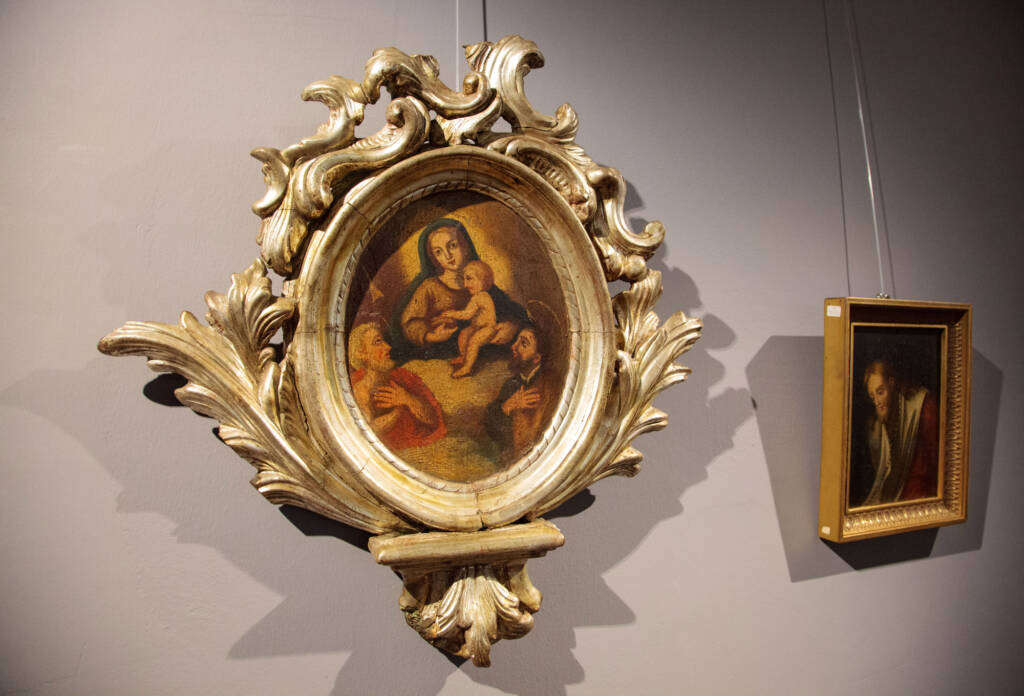
The Museum also hosts a rich picture gallery with over one hundred and thirty works, including paintings on canvas and panels, covering a time span from the 15th to the 19th century.
Among the most significant pieces are the “Saint Michael the Archangel” attributed to Antonello da Messina and “Our Lady of Sorrows among the Angels” by Antonino Cilea from 1711.
Another section is dedicated to sacred vestments dating to the 18th and 19th centuries, whose manufacture is linked to local silk production, particularly in the area of Villa San Giovanni, and to the display of a rich collection of sacred silver: chalices, incense boats, pyxes, and monstrances ranging from the 16th to the 19th century, belonging mostly to the Neapolitan and Messina schools.
Finally, worth remembering are the section of ivories and some sculptures such as the 15th-century Madonna Enthroned with Child in pink marble from Taormina and a Madonna with Child in alabaster from the 16th century.